
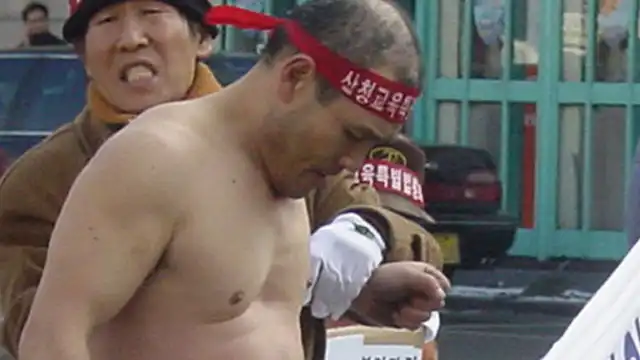
Indomitable spirit.
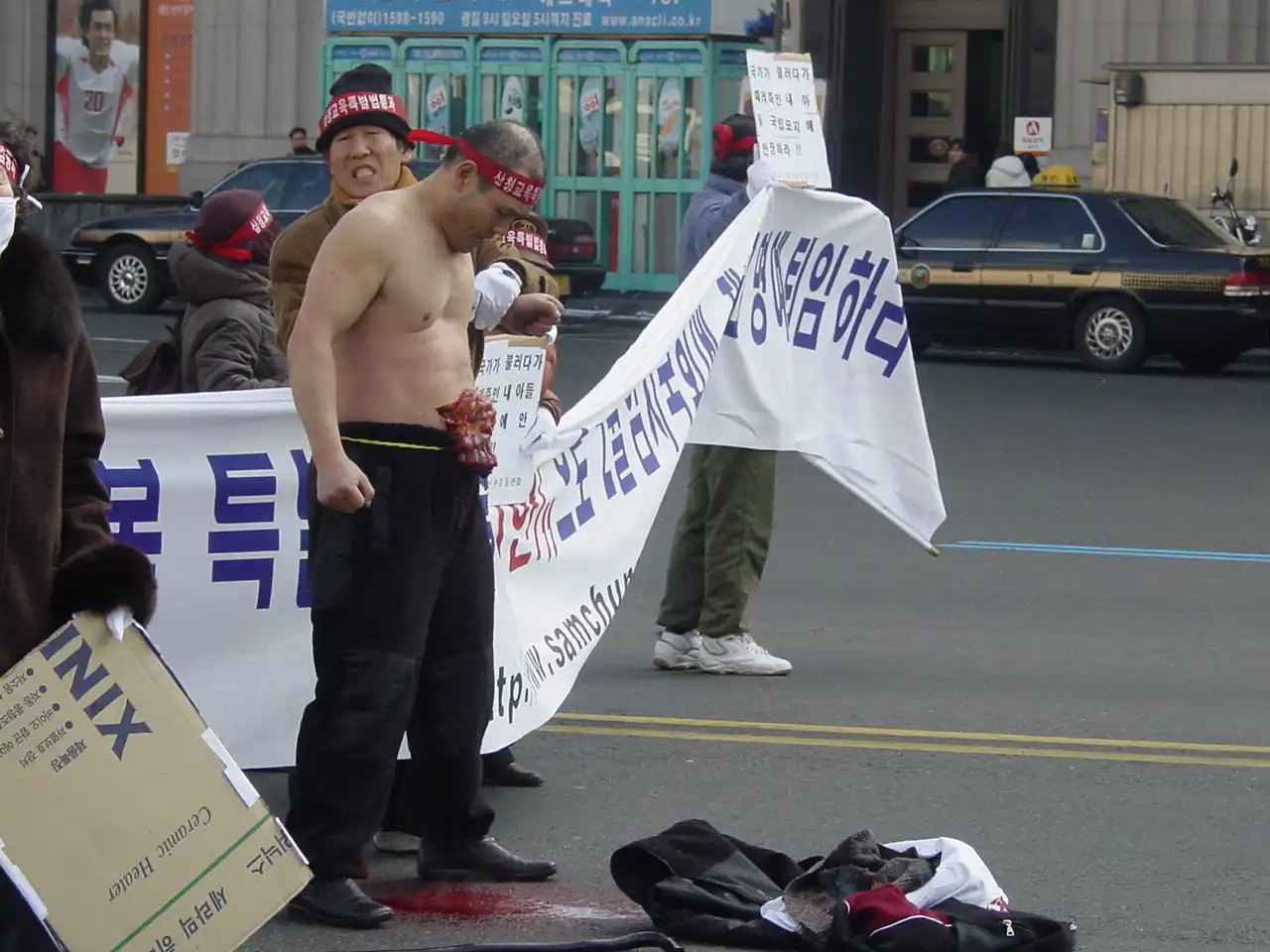
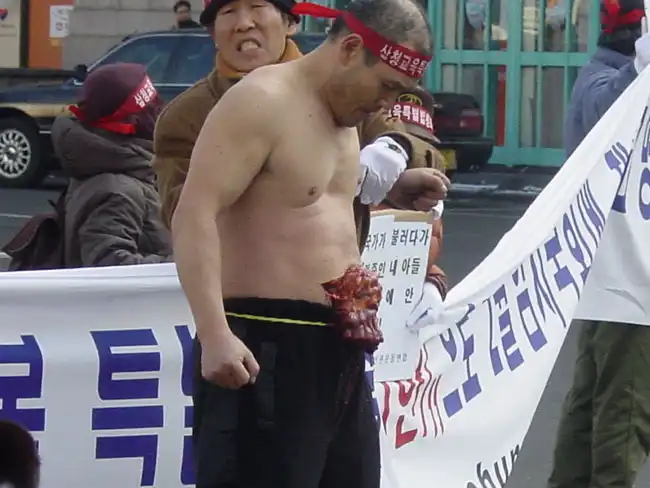
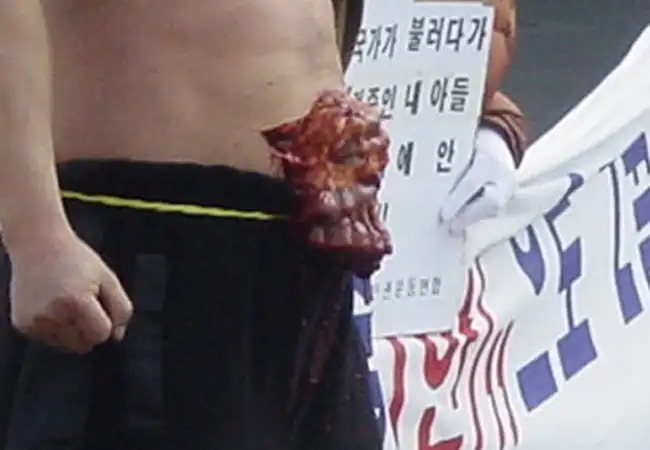
In January 2003, in Seoul, South Korea, a 49-year-old man—a victim of the Samcheong Re-education Camps—slashed open his own abdomen on the street to demand the restoration of his honor and financial compensation. This is a photograph—and a bit more—capturing him protesting with his internal organs exposed.
Note
The Chun Doo-hwan administration established the Samcheong Re-education Camps in 1980 in South Korea under the pretext of “social purification.” Individuals labeled as criminals or “delinquent elements” were forcibly detained there and subjected to brutal military training and physical abuse, resulting in numerous deaths, injuries, and victims left with lasting trauma.
Images
1
2
3
Act on Compensation for the Samcheong Re-education Corps Enacted in 2004
The protest was carried out by a 49-year-old man who was a member of the Coalition for the Human Rights of Samcheong Re-education Camp Victims. On January 23, 2003, during a protest in front of the Bank of Korea headquarters in Seoul, he cut open his own abdomen and was transported to a hospital by emergency responders. On that day, victims’ groups were demanding three things: the transfer of jurisdiction over matters related to the Samcheong Re-education Camp, the enactment of a special law to restore their honor, and state compensation. Following subsequent advocacy efforts, the “Act on the Restoration of Honor and Compensation for Victims of the Samcheong Re-education Camp” was enacted and implemented in January 2004, establishing provisions for compensation to the bereaved families of the deceased and for the loss of earning capacity among those who suffered disabilities.
The urgent demand for this legislation stemmed from the sheer scale of the harm inflicted. In 1980, under the Chun Doo-hwan administration, over 60,000 people were detained without court warrants, and 39,742 were confined for “purification education.” Official records indicate that 54 people died, while the death toll attributed to the aftereffects of their confinement is estimated to be as high as 397. Although seven military personnel received prison sentences for causing the deaths of civilians through assault, reports suggest that the punishment of perpetrators was inadequate; for instance, some had their sentences suspended at the discretion of unit commanders.


Comments