
You mustn’t die.
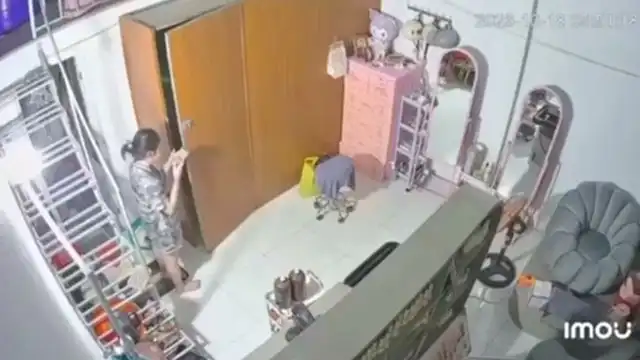
A tragic three-and-a-half-minute sequence: a Vietnamese woman, who lost her husband earlier that year, dies by hanging herself in her room. She bids farewell to her current partner and her children through a screen before choosing to take her own life.
Video
Barriers Hindering Asset Inheritance by Widows
As is the case with this woman, who lost her husband earlier this year, it has been noted that women in Vietnam who are widowed often find themselves in precarious economic situations. Due to traditional Confucian-influenced norms, widows frequently face social barriers that make it difficult for them to independently inherit or hold assets such as land and housing. A 2018 national survey revealed that 18.4% of households headed by widows were classified as living in poverty—a figure significantly higher than the 10.6% average for all households. Furthermore, the average annual earned income for a widow serving as a household head is only 6.5 million dong—less than one-third of the 21.4 million dong earned by other household heads—and these households also tend to be more vulnerable in terms of food security and access to adequate housing and water.
Meanwhile, the overall suicide rate in Vietnam as of 2021 stood at 7.3 per 100,000 people, a level slightly lower than the global average of 8.55. This presents a striking contrast: while many widows face significant economic hardship, the national statistics do not show an exceptionally high suicide rate.
Watch Next
 A student wife plants a sorrowful kiss on her husband, who committed suicide in the midst of a conversation about separating.
 The “before-and-after” of a woman who casually hangs herself on her way home from a night out
 “If we’re going to die anyway, let’s go out with a spectacular bang”—the ‘Cliff-Hanging Youth’ sends sparks flying against the autumn sky.


Comments